Deutsche Film- und Fernsehakademie Berlin (DFFB)
DE
Released
‘Voices from the Shadows’ shows the brave and sometimes heartrending stories of five ME patients and their carers, along with input from Dr Nigel Speight, Prof Leonard Jason and Prof Malcolm Hooper. These were filmed and edited between 2009 and 2011, by the brother and mother of an ME patient in the UK. It shows the devastating consequences that occur when patients are disbelieved and the illness is misunderstood. Severe and lasting relapse occurs when patients are given inappropriate psychological or behavioural management: management that ignores the severe amplification of symptoms that can be caused by increased physical or mental activity or exposure to stimuli, and by further infections. A belief in behavioural and psychological causes, particularly when ME becomes very severe and chronic, following mismanagement, is still taught to medical students and healthcare professionals in the UK. As a consequence, situations similar to those shown in the film continue to occur.
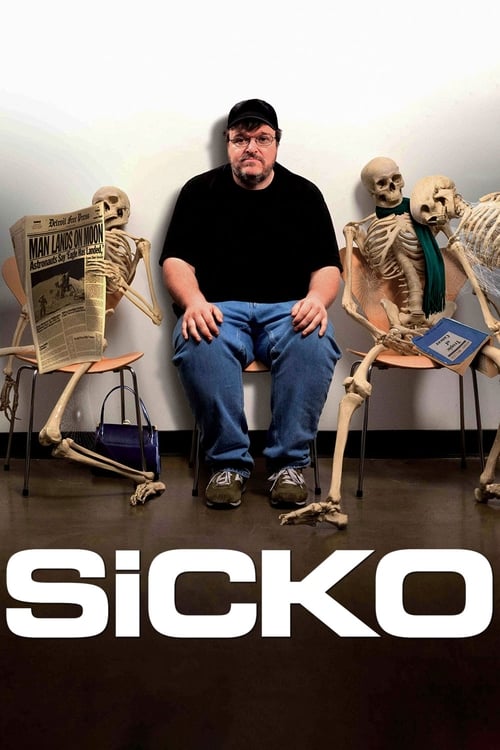
A documentary about the corrupt health care system in The United States whose main goal is to make profit even if it means losing people’s lives. "The more people you deny health insurance, the more money we make" is the business model for health care providers in America.
This is a Dutch documentary about the last weeks of life in a Portuguese clinic for Emma Caris, a 18 year old girl who had been suffering anorexia nervosa since she was 16 years old.
The extraordinary moving story of Toni Crews, a young mum with a rare terminal cancer who charted her illness online before donating her body for medical research and public dissection.
The words of the women and the rhythm of their lives in the seclusion of family compounds suggests both the satisfying and the limiting aspects of a woman's role in a rural Afghan community. Filmed in the Balkh Province, an area inhabited by Tajik and other Central Asian peoples. The town of Aq Kupruk is approximately 320 miles northwest of Kabul. The theme of the film focuses on women. The film and accompanying instructor notes examine the economic, political, religious, and educational status of women, their legal and customary rights, and the degree of change in their actual and perceived roles.
The Connection is a film about how frontier research is proving that there is a direct connection between your mind and your health.
Documentary written and presented by scientist Richard Dawkins, in which he seeks to expose "those areas of belief that exist without scientific proof, yet manage to hold the nation under their spell", including mediumship, psychokinesis, acupuncture, and other forms of alternative medicine.
With nutritionally-depleted foods, chemical additives and our tendency to rely upon pharmaceutical drugs to treat what's wrong with our malnourished bodies, it's no wonder that modern society is getting sicker. Food Matters sets about uncovering the trillion dollar worldwide sickness industry and gives people some scientifically verifiable solutions for curing disease naturally.
Filmed and edited in intimate vérité style, this movie follows visionary medical practitioners who are working on the cutting edge of life and death and are dedicated to changing our thinking about both.
After the Indian Ocean Tsunami of 2004, widowed women struggled to receive aid due to their social status. Following the story of Mrs. Manjula along with many other women from Tamil Nadu, the challenges faced by millions of widows across the country are illuminated. From being ostracized to denied basic rights and economic opportunities, widows in India endure a cycle of discrimination and marginalization. “Kalangarai” meaning "lighthouse" in Tamil, is an organization dedicated to empowering women through initiatives such as self-help groups and educational programs. Throughout the film, "Lighthouse" illustrates the emotional journeys and resilience of these women, as well as the active change that Kalangarai strives to achieve. This documentary urges global awareness and support for widowed women’s rights, as the women’s struggles depict the intersectionality of gender, poverty, and social injustice.
In the early 1970s, a group of secretaries in Boston decided that they had suffered in silence long enough. They started fighting back, creating a movement to force changes in their workplaces. This movement became national, and is a largely forgotten story of U.S. twentieth century history. It encapsulates a unique intersection of the women’s movement with the labor movement. The awareness these secretaries brought to bear on women’s work reverberates even today. Clericals were the low-wage workers of their era. America now confronts the growing reality of deep income inequality. The stories and strategies of these bold, creative women resonates in contemporary America.
From the shadows of a Guatemalan neighbourhood scared into silence, two sisters lead a luminous rebellion—unleashing joy, art, and radical truth in a fight for survival.