FR
Released
Ruben
Bacchus
Abel
Marguerite
L'homme du bar
La femme du bar
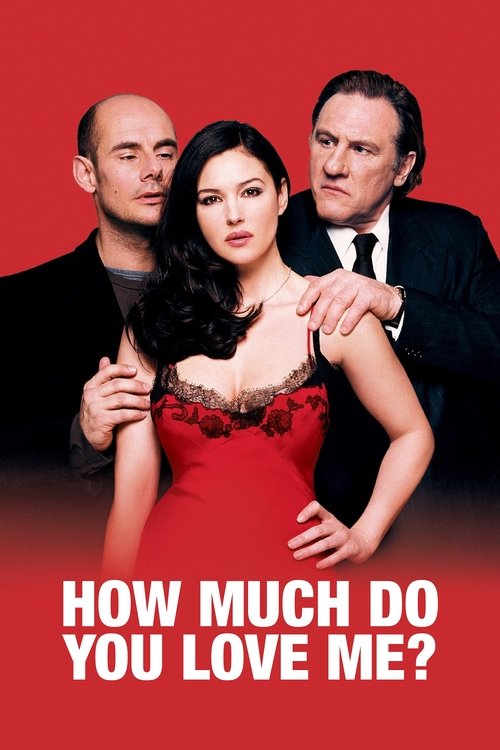
In Lyon, where many are unemployed, Marie is a prostitute who loves her work: she's thoughtful and exuberant toward clients old and young, slim or flabby. One night, a homeless man sleeps in the foyer of her apartment house; she gives him a hot meal, then a place on the floor to sleep by her radiator, then she offers herself. She falls in love, giving him new life, clothes, a place to live. When he grouses that he must bar hop while she uses the flat for her work, she finds them a larger flat. He grows restless, seducing a manicurist and pressing her to prostitution. He's arrested for procuring, so Marie must decide what to do; he, too, must face the consequences of his choices.
Successful romance novelist January Andrews struggles with grief and writer's block after her father's death and the discovery of secrets he's long kept hidden. While spending the summer in his Michigan beach house to prepare it for sale, she unexpectedly reconnects with Gus Everett, an author who was once her rival in college. Both creatively stuck, they agree to a writing challenge over the summer, swapping literary genres while promising that there will be no romance between them.
Over the course of a week, sisters Inger and Ellen find their relationship challenged on a highly anticipated coach trip to Paris. Inger reveals her struggles with schizophrenia to the group, receiving both pity and discrimination. On arrival, it soon becomes clear that Inger has a hidden agenda concerning a figure from her past, ultimately involving the entire group in her hunt for answers.
Parigi O Cara is probably the most camp in the history of Italian cinema, certainly a favourite with the queer community who quote its lines by heart. Unique as it's the only film where Franca Valeri (now 90) is the unquestioned star, in the role of Delia, a snobbish, stingy prostitute who is moving to Paris looking for greener and more lucrative pastures. An anti-neorealist, amoral, almost abstract comedy, which anticipates Almodóvar, a ferocious, though gentle, non-moralistic portrayal of the 60's boom and its broken dreams. The dialogue between Delia and her brother (played by Fiorenzo Fiorentini), when he does (or does not) tell her he is a homosexual, is memorable, a primordial coming-out, a masterpiece of allusions. But what makes it one of the first examples of a film with a "gay point of view" is the approach: perceptive, non-conformist, caustically witty. A film ahead of its times, still unbeaten.
Teenage boy Tom lives with his single mum in a flat in South London. Into the flat below moves Steve, an anti-social former Rock God who faked his death 8 years ago. Tom agrees not to reveal his secret on condition that he teaches him the dark arts of Rock Guitar.
How Robert, who does not manage to impose himself in the representation, sees his life turned upside down when he begins a career as a street vendor, which, thanks to his resourcefulness, turns out to be more and more brilliant.
We follow how four ordinary little girls learn about life, love and all that sort of things.
Arthur and Anatole are two little robbers. They want to rob money, money that will travel in a special train from Paris to Bruxelles. They don't know that other people have planned to do the same thing.
Aging beautician Angèle, already wounded by a long-ago romance, gets awkwardly dumped at a train station. Witnessing how she turns around a humiliating situation, younger sculptor Antoine becomes so smitten that he breaks up with his fiancée and sets out to win Angèle's heart. Meanwhile, Angèle attempts to quash the budding romance of her young co-worker, Marie, and a much older widowed client, despite their obvious rapport.
Left heartbroken by the death of his beloved wife, a rich banker tries to commit suicide. When he learns from his former maid that his wife was unfaithful, he fakes his own death and comes back under a new identity.
Throughout the 19th century, imaginative and visionary artists and inventors brought about the advent of a new look, absolutely modern and truly cinematographic, long before the revolutionary invention of the Lumière brothers and the arrival of December 28, 1895, the historic day on which the first cinema performance took place.
Claire Simon portrays an important time for any individual, from 16 to 18 years of age. Set in the Paris suburbs in high school (for those lucky enough to go), teenagers chat after and even during class, sitting in the hallway or outside on a bench, looking at the city below them.