DE
Released
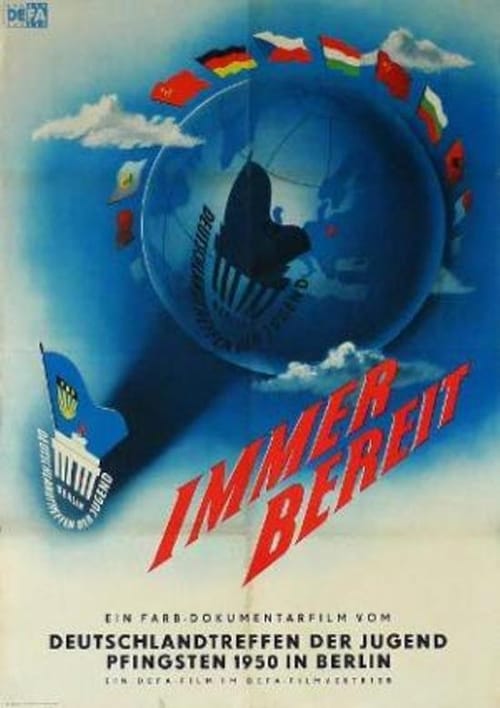
This color documentary tells the story of the "Mamais." In 1960, a group of workers at the Bitterfeld chemical plant set themselves the task of becoming the first "socialist brigade" in the German Democratic Republic (GDR) to act in accordance with the slogan "Work, learn, and live socialist."
The “Bowlingtreff” is a bowling alley situated right in the centre of Leipzig opened in July 1987. At that time the quality of life in Leipzig and the whole GDR got worse. Houses collapsed because of poor conditions, public life and amusement was on a very low level. The “Bowlingtreff” was not merely an urban entertainment centre but a revolution in those days. Built with the help of hundreds of volunteers without permission of the state authorities in Berlin the building expresses a free and international architecture known as postmodernism. It is an architecture that was never seen before in Leipzig. Marble and parquet on the floor, a glass roof and beautiful pink pillars. The atmosphere was western as time witnesses remember it.
At Hotel Astoria, the former hotspot of Leipzig, guests were served champagne and turtle soup while the Stasi listened in. Animated memories from times gone by.
No overview available.
Hard, harder, hardest! This film orders you from the start to turn up the volume and pay attention. "Look out! We're Coming to Get You!" is a flood of images driven by a tempest of guitars. The film's creators jam 20 years of German music history into 120 minutes of film. Musicians from BLIND PASSENGERS, DIE SKEPTIKER, SANDOW and other bands explode their way through the film. Fans of the DEFA documentary "Flüstern und Schreien" ("Whisper and Shout") already know the stars of that film, Aljoscha, Paul and Flake of the band Feeling B. Here they have a chance to see how these musicians survived the period after the fall of the Berlin Wall and the "escalation of possibilities" that came with it. And you're allowed to laugh, too!
Erich Honecker ruled the GDR for 18 years. His fall in 1989 heralded the downfall of the state that had called itself "the better Germany" for 40 years. Nazi victim and autocrat, bourgeois and power-conscious: Honecker was an ideological hardliner who coordinated the construction of the Wall in 1961 and whose regime was known as an unjust state for Wall deaths, firing orders, the Stasi and forced adoptions. In the wake of the fall of communism, the former model socialist fell into homelessness and found himself on the run in his own country. Suffering from cancer, he managed to evade responsibility before a court by emigrating to Chile, where he died in 1994. This gripping documentary portrays the rise and fall of this contradictory German politician with an impressive array of top-class international and national contemporary witnesses. Erich Honecker would have been 100 years old on August 25, 2012.
The film is a reportage showing the help of workers from the GDR in the industrial reconstruction of Syria. We witness the friendly relationship between workers from both countries, who are jointly involved in the construction of the cotton spinning mill in Homs. In impressive pictures the exoticism of the environment and the mentality of the Syrian hosts is shown. At the same time it becomes clear that the workers from the GDR become 'ambassadors of the GDR' through their collegial behaviour and good work.
This first co-production between the GDR and Great Britain is intended to contribute to an understanding of the situation and attitudes of millions of working people in opposing social orders. Using the example of shipyard workers, fishermen, the brigade and family of a trade union active cook and unemployed person of various ages and professions in Newcastle on the one hand and a brigade of crane operators of the Warnowwerft and fishermen of the Warnemünde cooperative on the other hand, insights into the way of life and attitudes of people of our time are to be conveyed.
Documents the remodeling of the Ostbahnhof in Berlin Friedrichshain into the central station of the GDR.
Short film about astronauts in the GDR
The viewpoints of women from a country that no longer exists preserved on low-band U-matic tape. GDR-FRG. Courageous, self-confident and emancipated: female industry workers talk about gaining autonomy.
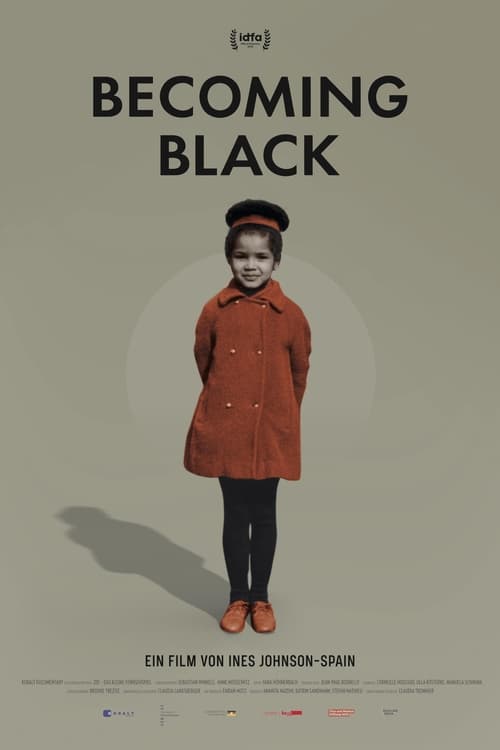
In the 1960s, a white couple living in East Germany tells their dark-skinned child that her skin color is merely a coincidence. As a teenager, she accidentally discovers the truth. Years before, a group of African men came to study in a village nearby. Sigrid, an East German woman, fell in love with Lucien from Togo and became pregnant. But she was already married to Armin. The child is Togolese-East German filmmaker Ines Johnson-Spain. In interviews with Armin and others from her childhood years, she tracks the astonishing strategies of denial her parents, striving for normality, developed following her birth. What sounds like fieldwork about social dislocation becomes an autobiographical essay film and a reflection on themes such as identity, social norms and family ties, viewed from a very personal perspective.